Abicht, W:
Der Champagner-Arzt. Neueste Erfahrungen über die wohlthätigen diätetischen und arzneilichen Kräfte der Schaumweine. Nordhausen, Ernst Friedrich Fürst (Druck von C. Hoffmann in Stolberg a/H.), 1845. 117, (3) SS. Bedruckte Verlagsbroschur. 12mo. Einzige Ausgabe; von größter Seltenheit. Die Broschüre behandelt in geistreicher Form die medizinischen und diätetischen Vorzüge des Champagners und anderer Schaumweine, insbesondere seine gedeihlichen Wirkungen gegen Magenkrämpfe, Erbrechen, Anämie, Menstrualbeschwerden und viele andere Leiden mehr. - Leicht gebräunt; vorderer Broschurdeckel restauriert. Provenienz: aus der Sammlung des französischen Likörmagnaten Max Cointreau (1922-2016) mit seinem Exlibris am vorderen Innendeckel. In Bibliotheken international nur ein einziges Exemplar nachweisbar (British Library, Reference Collections). - OCLC 751391874.
Bestellnummer: 54651 - Aus Liste: Naturwissenschaften, Medizin, Technik Anbieter:
Antiquariat Inlibris, Gilhofer Nfg. GmbH, AT - 1010 Wien - AGB
Alberti, Michael (praes.) / Behrisch, Christian Gottfried (resp.):
Dissertatio inauguralis medica, de phantasiae usu, lusu et abusu in medicina. Halle, Johann Christian Hendel, 1722. (2), 38 SS. Geheftet. 4to. Einzige Ausgabe der seltenen Schrift. "[Zählt z]u den ersten Versuchen, die Einbildungskraft als Deutungsmacht aus der Medizin endgültig zu verdrängen [... Die Abhandlung] enthält zahlreiche Beispiele aus der medizinischen Literatur und eigene Beobachtungen, die Alberti gezielt einsetzt, um mit dem unsinnigen Gebrauch der Einbildungskraft in der Medizin gründlich abzurechnen. Mit vehementen Worten wettert er gegen die falschen Eingebungen, die von den vernünftigen nicht unterschieden werden [...] Mit viel Phantasie läßt dann Alberti auf der Bühne dieser Eingebungen allerlei medizinischen Behauptungen nacheinander auftreten, die vor Augen führen, wie mit kunstvoller Phantasie Nichtbewiesenes anstelle des Wirklichen konstruiert wird [...] Zur Bekräftigung seiner Ansicht führt Alberti die zahllosen medizinischen Theorien an, die mit Würmchen, Kügelchen, Häckchen, Bläschen, Nervenflüssigkeiten, Archaei, Verstopfungen, mechanischen Kräften, Chimären und ähnlichen Phantasmata ihre Theorien stützen" (Müller/Watzke, 103f.). Schon in Hufelands "Journal der practischen Heilkunde" (1829) heißt es: "Es sind jetzt 100 Jahre, dass man nicht allein auf die Heilkräfte der Natur [...], sondern auch recht eifrig auf den Einfluss der Einbildungskraft des Menschen aufmerksam machte. Wir haben aus jener Zeit eine grosse Anzahl von Schriften über diesen wirklich sehr bedeutenden Gegenstand. Es scheint aber, dass alle demselben damals gewidmete Aufmerksamkeit für die Heilkunst die Früchte nicht brachte, die man mit Recht davon hätte erwarten können, sondern sich bloß spielend allmählig in jenen bekannten Streit über das Versehen der Schwangern und über Muttermäler nutzlos concentrirte und da erlosch" (III, 103f.; unter beispielhafter Anführung der vorliegenden Schrift). - Etwas (braun-)fleckig; einige Marginalien der Zeit. Das letzte Bl. knittrig und mit Randläsuren (etwas Buchstabenverlust). - Wellcome II, 23. I. Müller/Watzke, Gebrauch und Missbrauch der Einbildungskraft in der Medizin des 17. und 18. Jhs., in: R. Behrens (Hg.), Ordnungen des Imaginären. Theorien der Imagination in funktionsgeschichtlicher Sicht (Hamburg, 2002), S. 89 ff., hier: S. 103. Nicht bei Blake.
Bestellnummer: 24812 - Aus Liste: Naturwissenschaften, Medizin, Technik Anbieter:
Antiquariat Inlibris, Gilhofer Nfg. GmbH, AT - 1010 Wien - AGB
Albmair, Teodoro:
I quattro elementi spiegati in venticinque discorsi [...]. Florence, all?insegna della Stella, 1668. 4to. 278 pp. 18th century half vellum with marbled covers. Edges sprinkled. First and only edition of this rare and exceedingly curious book of secrets and popular medicine, a fantastical collection of miracles and notes on disparate topics by the native Tyrolean Theodor Albmair, former secretary to Emperor Ferdinand III. - "In the twenty-five discourses or chapters of his book, the author has something to say about not only the elements but all the fruits of the earth, whilst the most important chapter of all is the twenty-sixth; it is called 'Discorso particolare', and it deals with man in health and in sickness. The fourteenth 'Discorso' deals with bread, the fifteenth with wine" (Simon). Other subjects include gems and precious stones, moss, ambra and balms, metals, herbs, rare flowers and how to cultivate them; various animals, including such as supposedly dwell in fire, etc. "Ein rares, seltenes Buch" (Grass, Verzeichniß einiger Büchermerkwürdigkeiten, 1790, p. 8). - Binding rubbed and bumped. Interior somewhat brownstained throughout; some insignificant worming to lower corner (not touching text). Without flyleaves or final blank leaf. - Provenance: title-page has 18th century manuscript ownership of Giovanni Modesto Canciani, who probably commissioned the binding; last page of text has his handwritten statement: "1770: 20 Xbris liber iste a me Joanne Modesto Canciani totaliter usque ad hanc diem est perlectus" (last word trimmed by binder and then supplied again by the same writer). Additional stamped ownership of the Collegio Universitario Antonianum in Padua ("Antonianum Coll. Univ. Bibl.") with their shelfmarks to title-page. Very rare: OCLC lists only four copies in libraries (Wellcome Library; Univ. of Chicago; Univ. of Michigan; Bibliothèque de Genève); a single copy in auction records (André L. Simon's copy, sold at Sotheby's in 1981). - Simon 80. Wellcome II, 26. Sinkankas 60-A ("not seen"). Agassiz I, 111. Böhmer IV, 1, 281. Haym, p. 517, no. 9. Brückmann, Bibliotheca animalis continuatio (1747), p. 12. Cat. of the Science Library in the South Kensington Museum (1891), p. 242. Cat. of the Library of the Museum of Practical Geology (1878), p. 9. OCLC 23632541. Not in Krivatsy, Rosenthal, Ferguson etc.
Bestellnummer: 54196 - Aus Liste: Naturwissenschaften, Medizin, Technik Anbieter:
Antiquariat Inlibris, Gilhofer Nfg. GmbH, AT - 1010 Wien - AGB
Alpini, Prosper:
De praesagienda vita et morte aegrotantium libri septem [...]. Cum praefatione Hermanni Boerhaave, emendavit Hieron. Dav. Gaubius [...]. Accedit Hieronimi Fracastorii de diebus criticis libello. Editio Veneta ceteris emendatior. Venedig, Domenico Tabacco sub signo Sancti Francisci / sub signo Aldi, 1735. 2 Teile in 1 Band. (4), XX, 410 SS., l. w. Bl. (2), 20 SS. Mit gest. Portraitfrontispiz, Titelvignette in Holzschnitt und Holzschnittdruckermarke am Zwischentitel. - (Beigebunden) II: Hippocrates. Aphorismi, ad mentem ipsius, artis usum, & corporis mechanismi rationem expositi. Auctore Joanne Hecquet. A Parisiana editione editio prima. Neapel, Felix Musca für Giuseppe Ponzelli, 1731. (8), XV, (1), 336 SS. Lederband der Zeit mit doppeltem goldgepr. Rückenschildchen und -vergoldung. Dreiseitiger gesprenkelter Rotschnitt. Marmorspiegel. 4to. Spätere Ausgabe dieser "classic treatise on prognosis based on Hippocrates' writings" (Eimas). Prosper Alpini (1553-1617) war Leibarzt des Dogen Andrea Doria; als Botaniker bereiste er Ägypten und gab die erste wissenschaftliche Beschreibung des Kaffeestrauchs. - Titel mit hs. Besitzvermerk von 1744 und Budapester Bibliotheksstempeln. - II: Seltene neapolitanische Ausgabe von Hippokrates' Aphorismen. Griechischer Text und lateinische Übersetzung, darunter ausführlicher lateinischer Kommentar. Titel mit kleinem Randausriß (Verlust eines Blattweisers) und zeitgenöss. hs. Besitzvermerk. - Vorsätze mit Resten entfernter Exlibris; Deckweißspur am vorderen Vorsatz. Papierbedingt leicht gebräunt. Rücken berieben, die Kapitale mit Wurmspuren. - I: Blake 12. Osler 1801. Wellcome II, 36. Vgl. Eimas 386. Garrison/Morton 2194 (EA 1601). - II: Blake 213. Wellcome III, 272. Diese Ausgabe nicht bei Hoffmann oder Schweiger.
Bestellnummer: 17185 - Aus Liste: Naturwissenschaften, Medizin, Technik Anbieter:
Antiquariat Inlibris, Gilhofer Nfg. GmbH, AT - 1010 Wien - AGB
Antoine, Franz de Paula d. J. (Hg.):
Der Wintergarten in der kaiserlichen königlichen Hofburg zu Wien. Wien, P. P. Mechitaristen / Johannes Rauh, 1852. Quer-Folio (600 x 445 mm). (6), VI, 11, (1) SS. Mit 12 handkol. lithogr. Tafeln und transparenten Folienpapieren mit den wissenschaftlichen Namen der abgebildeten Pflanzen. Widmungsblatt mit hochgeprägtem Wappen des Erzherzogs Maximilian. Elegant schwarzgeprägter Lederband der Zeit mit goldgeprägtem Einbandtitel. Dreiseitiger Goldschnitt. Weiße Moiréeseidenvorsätze. Erste Ausgabe des bedeutenden botanischen Tafelwerks mit handkolorierten Ansichten des ehemaligen Glashauses im Wiener Burggarten, gefertigt von L. Czerny meist nach Originalzeichnungen des k. k. Hofgärtners Franz Antoine (1815-86), der für das vorliegende Werk vom preußischen und bayerischen Hof ausgezeichnet wurde. Neben einer winterlichen Außenansicht zeigen die Illustrationen den durchaus beeindruckenden Pflanzenbestand im Inneren des Glashauses in den Wintern 1849/50 und 1850/51, darunter Zitrus- und Orangenbäume, Zypressen, Magnolien, Hyazinthen, Olivenbäume, Pinien, Rhododendren, Yucca-Palmen und vieles mehr. - Glanzpunkt des ab 1817 angelegten Burggartens war das nach Hofbaudirektor Ludwig Gabriel Rémy benannte Glashaus, der die Pläne für den 1818-20 errichteten Bau lieferte. Es war von der Hofburg über einen unterirdischen Gang, den so genannten Laternengang, erreichbar. Kaiser Franz II. pflegte im Glashaus Gäste zum Frühstück zu empfangen. 1901 musste das Glashaus einem Neubau weichen, dem Palmenhaus von Friedrich Ohmann. - Gewidmet dem botanisch interessierten Erzherzog Ferdinand Maximilian, später als Maximilian I. Kaiser von Mexiko. Äußerst selten; im Handel nur ein einziges weiteres handkoloriertes Exemplar nachweisbar. Ein kunstvolles Zeugnis botanisch-taxonomischer Literatur im deutschsprachigen Raum. - Einband leicht berieben. Die Folienpapiere durchwegs beschädigt, teils nur fragmentarisch erhalten bzw. fehlend. Die Tafeln vereinzelt etwas stockfleckig, jedoch ohne Bildberührung. - Altes hs. Signaturschildchen am Vorderdeckel. - Nissen BBI 44. Stafleu, Taxonomic Literature Suppl I., 19.300. Junk, Bibliographiae Botanicae Suppl. 28468. Für Antoine vgl. Hochreiter/Starl 98.
Bestellnummer: 67874 - Aus Liste: Naturwissenschaften, Medizin, Technik Anbieter:
Antiquariat Inlibris, Gilhofer Nfg. GmbH, AT - 1010 Wien - AGB
Antoine, Franz de Paula d. J:
Photographische Blätter aus dem Wintergarten des k. k. Hofburggartens in Wien. [Wien, ca. 1875]. Folio (441 × 325 mm). 20 Albuminphotographien (197 x 230 mm), montiert auf Kartontafeln mit schwarz-goldener Bordüre. Eine weitere, etwas kleinere Photographie auf der Titelseite. Halbleinenportfolio der Zeit mit aufgezogenem Einbandtitel und Schließbändern. Erstausgabe. Seltene botanische Stillleben, aufgenommen vom k. k. Hofgärtner und Amateurphotographen Franz Antoine (1815-86) im ehemaligen Glashaus im Wiener Burggarten. Die Photographien zeigen den beeindruckenden Pflanzenbestand im Inneren des Glashauses, darunter deckenhohe Bäume und Palmen sowie ausladende Farne, Kakteen, Sträucher und eine Fülle an Blumen in voller Blütenpracht. Besonders hervorzuheben sind die Aufnahmen einer Welwitschie (Weltwitschia mirabilis), einer in Namibia endemisch vorkommenden Pflanzenart, sowie einer Bengalischen Feige (Ficus benghalensis), die ursprünglich nur in Süd- und Westindien beheimatet war. - Glanzpunkt des ab 1817 angelegten Burggartens war das nach Hofbaudirektor Ludwig Gabriel Rémy benannte Glashaus, der die Pläne für den 1818-20 errichteten Bau lieferte. Es war von der Hofburg über einen unterirdischen Gang, den so genannten Laternengang, erreichbar. Kaiser Franz II. pflegte im Glashaus Gäste zum Frühstück zu empfangen. 1901 musste das Glashaus einem Neubau weichen, dem Palmenhaus von Friedrich Ohmann. - Äußerst selten; im Handel nur ein einziges weiteres Exemplar nachweisbar. Ein unvollständiges Exemplar (16 Tafeln) befindet sich im Bestand der Universität Utrecht. Ein kunstvolles Zeugnis aus der Anfangszeit der botanischen Photographie. - Portfolio gering berieben; am Rücken 2 kleinere Fehlstellen; Innendeckel etwas fleckig. Die Tafeln an den Rändern vereinzelt etwas berieben. Titelseite lichtrandig; die Titelphotographie sowie die Photographie der Welwitschia leicht verblichen. - Nicht bei Heidtmann, Stafleu, Junk, Nissen. Für Antoine vgl. Hochreiter/Starl 98. OCLC 66558025.
Bestellnummer: 67701 - Aus Liste: Naturwissenschaften, Medizin, Technik - Graphiken Anbieter:
Antiquariat Inlibris, Gilhofer Nfg. GmbH, AT - 1010 Wien - AGB
Apollonius of Perga:
Conicorum lib[ri] V, VI, VII. Paraphraste Abalphato Asphahanensi nunc primum editi. Florence, Giuseppe Cocchini, 1661. Folio (228 x 330 mm). (36), 415, (1) pp. Title-page printed in red and black. With hundreds of geometric figures in the text. - (Bound after) II: Coenders van Helpen, Barent. Thresor de la philosophie des anciens où l'on conduit le lecteur par degrez à la connaissance de tous les metaux & mineraux [...]. "Cologne" (i.e., Groningen), Claude le Jeune, 1693. (6), 240 pp. Title-page printed in red and black. With allegorical frontispiece ("Escalier des Sages"), woodcut ornaments, 12 allegorical plates, and 5 copper engraved plates with alchemical motifs. Contemporary smooth, deep auburn full calf with gilt ornamentation and traces of a label to spine. Editio princeps of books V, VI and VII of the "Conica", the most original part of Apollonius's fundamental work on conic sections. The text survives only in the Arabic manuscript of Abu 'l Fath of Ispahan, purchased by the Medici family in the first half of the 17th century and here translated and edited by Alfonso Borelli. "This was a valuable addition to the mathematical knowledge of the time, for whereas Books I-IV of the Conics dealt with information already known to Apollonius's predecessors, Books V-VII were largely original. Book V discusses normals to conics and contains Apollonius's proof for the construction of the evolute curve; Book VI treats congruent and similar conics and segments of conics; Book VII is concerned with propositions about inequalities between various functions of conjugate diameters" (Norman). "The fifth book is especially important treating of normals as minimum and maximum straight lines drawn from given points to the curve" (Honeyman). "The sixth book is on the similarity of conics. The seventh book is on conjugate diameters" (Cajori). - A fine, wide-margined copy. Bound first is the final edition of the "Thresor de la philosophie des anciens", a reference treatise for the theory and practice of alchemy, esotericism and hermetic philosophy that draws on Hermes Trismegistus, Paracelsus, and Sendivogius. Couched in the form of a dialogue, the book discusses the ten-step ascent to the single matter via two qualities, three principles, and four elements. The 17 remarkable allegorical plates depict alchemy, chaos, heat, love, the elements, sulphur, mercury, and salt. The Groningen politician Coenders (1601-78) first published this rare work in 1686. - Occasional light browning; title-page trimmed along top edge. Binding a little rubbed at extremeties, spine-end professionally repaired, but an appealing volume. - I: Norman 58. Honeyman 119. De Vitry 29. Sarton I, 173-175. DSB I, 179-193 (Apollonius) & II, 308f. (Borelli). Cajori, A History of Mathematics, pp. 40f. DBI XII, 546. Riccardi I, 158 ("bella edizione, ed assai ricercata"). - II: VD 17, 7:651937N. Caillet 2419. Duveen 287. Verginelli 74. Brüning II, 2718. Brunet II, 1052.
Bestellnummer: 52063 - Aus Liste: Naturwissenschaften, Medizin, Technik Anbieter:
Antiquariat Inlibris, Gilhofer Nfg. GmbH, AT - 1010 Wien - AGB
Appeltauer, Ignaz:
Elementorum matheseos purae. Pars prima, continens algebram. (Und: Pars altera, continens geometriam, trigonometriam et sectiones conicas). Wien & Triest, Joseph Geistinger, 1814-1817. 2 Bde. in einem. (6), 344. (2), 414 SS. Mit 8 mehrf. gefalt. gest. Tafeln. Pappband der Zeit. Dreiseitiger Farbschnitt. 8vo. Einzige Ausgabe. - Ignaz Appeltauer (auch: Appeltaner, 1769-1829) war Professor der Mathematik an der Universität Wien. - Einband berieben; papierbedingt teils etwas braunfleckig. Die Tafeln zeigen mathematisch-geometrische Modelle. - Poggendorff I, 53. Seemann (Geistinger) 421 u. 499.
Bestellnummer: 11326 - Aus Liste: Naturwissenschaften, Medizin, Technik Anbieter:
Antiquariat Inlibris, Gilhofer Nfg. GmbH, AT - 1010 Wien - AGB
[Aristotle (Pseudo-)]:
Utilissimus liber Aristotelis de secretis secretorum. (Burgos, Andrés de Burgos, 26 June 1505). 4to (156 x 200 mm). (88) pp. With woodcut printer's device in the colophon. - (Bound after) II: Köbel, Jacob. Astrolabii declaratio, eiusdemque usus mire iucundus, non modo astrologis, medicis, geographis, caeterisque literarum cultoribus multum utilis ac necessarius [...]. Mainz, Peter Jordan, 1532. (44) pp. With woodcut title-page and several woodcut illustrations in the text. - (Bound with) III: [Sacrobosco, Johannes. Sphaera Mundi]. Venice, Giacomo Penzio, 1519. 46 (instead of 47), (1 blank) ff. With woodcut illustrations throughout. - IV: "Quatuor plagas mundi Ubi fint feire". (100) pp. Latin manuscript on paper. Contemporary limp vellum with four later leather straps. All edges red but faded. Rare Spanish edition of one of the most widely read texts of the High Middle Ages - the pseudo-Aristotelian "Secret of Secrets", purportedly a letter from Aristotle to his student Alexander the Great on an encyclopedic range of topics, including statecraft, ethics, physiognomy, astrology, alchemy, magic, and medicine, supposedly based on a tenth-century Arabic text. The present edition is one of only seven works attributable to the printer Andrés de Burgos, only briefly active in Burgos between May 1503 and June 1505. - Modern scholarship assumes the text to date from after the Encyclopedia of the Brethren of Purity and before the work of Ibn Juljul in the late tenth century. The section on physiognomy may have circulated as early as AD 940. The Arabic text was translated into Persian (at least twice), Ottoman Turkish (twice), Hebrew, Spanish, and twice into Latin. The Hebrew edition also formed the basis for a translation into Russian. The first partial Latin version was prepared for the Queen of Portugal in ca. 1120 by the converso John of Seville; it is now preserved in about 150 copies under the title "Epistola Aristotelis ad Alexandrum de regimine sanitatis" ("Aristotle's letter to Alexander on good health"). The present second translation, and the first of the whole work, was done at Antioch ca. 1232 by the canon Philip of Tripoli for Bishop Guy of Tripoli. - II: First edition of Jacob Köbel's famous treatise on the astrolabe, including a full-page woodcut of a muse holding the sphere of the universe on the reverse of the title-page. Essentially an instruction on the use of the astrolabe, it demonstrates how to calculate time, location, and hours, including various explanatory diagrams and charming illustrations. - III: Rare Venice edition of one of the most influential works of pre-Copernican astronomy in Europe, Johannes de Sacrobosco's "De Sphaera Mundi" from ca. 1230, which introduced the fundamental elements of astronomy. Drawing heavily on Ptolemy's Almagest and Arabian astronomical concepts, it was one of Europe's most influential works on astronomy before Copernicus. The first edition was printed in Ferrara in 1472, and over 90 editions were published in the following two centuries. - IV: An anonymously composed Latin manuscript on astronomy, geometry, trigonometry and arithmetics, drawing on the works of Bohemian astronomer Christian of Prachatice (ca. 1360-1439) and Johannes von Gmunden (ca. 1380-1442), founder of the Vienna School of Astronomy, as well as other scholars. The text elaborates on astronomical calculations and the use of the astrolabe, including some trigonometric sketches for measuring height and angles. Prepared by at least three hands, the manuscript forms two distinct parts (the first comprising 44 pp., the second one 56 pp.) with Sacrobosco and Aristotle bound in between. - Binding somewhat spotted, chipped and frayed. - I: A7 has two burn holes, one repaired, causing some text loss. Marginal manuscript annotations throughout. - II: Small marginal tears to title-page, A2 and A3. Some waterstaining. - III: Lacks title-page (supplied in facsimile). - Some more waterstaining to final manuscript section. - I: Cranz 107.722. Norton 315. Palau I, 114. - II: VD 16, K 1591. DSB VII, 419. Adams I, 611. Cf. BM-STC German 474 (1535 ed.). - III: Cf. DSB XII, 60-63. This edition not in BM-STC Italian or Adams.
Bestellnummer: 67058 - Aus Liste: Naturwissenschaften, Medizin, Technik Anbieter:
Antiquariat Inlibris, Gilhofer Nfg. GmbH, AT - 1010 Wien - AGB
Astruc, Jean:
De morbis venereis libri novem. Editio altera. Paris, Cavelier, 1740. 2 Bde. (4), XXXVI, 536, DXXXVII-DCVIII SS. (6), (537)-1196 SS. Neue Lederbände mit Rückentitel u. -fileten sowie einfachen Deckelfileten. Dreiseitiger Rotschnitt. 4to. Laut Hirsch beste Ausgabe des erstmals 1736 in lateinischer Sprache erschienenen Handbuchs. "Es existieren 21 verschiedene Ausgaben und Uebersetzungen dieses heute noch umfänglichsten Werkes über die venerischen Krankheiten [...] Es ist dies die werthvollste" (Hirsch/H.). "[A]dmirable and comprehensive book on the subject. It includes a careful review of the existing literature" (Garrison/M.) - Mit altem hs. Besitzvermerk "Jung" am Titel des ersten Bandes. - Schönes und sehr sauberes Exemplar in hervorragenden Einbänden im Stil der Zeit. - Eales, Cole Libr. I, 1442. Haeser II, 603. Hirsch/Hübotter I, 230. Osler 1851. Proksch I, 30. Wolfenbüttel 101. Vgl. Garrison/Morton 5195, Lesky 33. Waller 513. Wellcome II, 64.
Bestellnummer: 12324 - Aus Liste: Naturwissenschaften, Medizin, Technik Anbieter:
Antiquariat Inlibris, Gilhofer Nfg. GmbH, AT - 1010 Wien - AGB
Babbage, Charles / Nagy, Karl:
Logarithmen der Natürlichen Zahlen 1 bis 108.000. Von Karl Babbage, Esq., M.A. [...] Dritte Stereotyp-Auflage, besorgt und mit der Einleitung in deutscher Sprache herausgeben, von Karl Nagy. London, gedruckt für die Ungarische Akademie der Wissenschaften, 1834. 8vo. XVI, IV-XIV, 201, (1) pp. 20th century quarter calf over cloth boards, with gilt title on spine. A handsome, fresh copy; red ink stamps of the Kensington Public Libraries on first leaf of ?Vorwort? and final leaf of errata. Very rare bilingual German/Hungarian translation of Babbage?s work on logarithms, printed at the expense of the Hungarian Academy of Sciences apparently in order to convey Babbage's work to interested readers within the Austro-Hungarian Empire. Karl Nagy himself was inspired by Babbage?s work to produce his own little-known calculating machine, for which records survive only in manuscript and in a rare Hungarian monograph of the period. - It was Babbage's experience in constructing his logarithmic tables which convinced him that such numerical exercises could be better produced by mechanical means. His work on a "Difference Engine", a mechanical computer, was intended to accomplish this laborious chore. The relationship between Karl Nagy (1797-1868) and Babbage (1791-1871) is based on few sources including the present work. In a letter to Babbage dated 9 April 1833, Nagy expresses his admiration for Babbage's tables and his intention to introduce his countrymen to them, in effect asking permission to produce the present translation. Nagy also appears to have met Babbage during the former's short spell in London. Recently-unearthed manuscripts in Hungary show that Nagy in fact drew up plans for constructing his own difference engine based on Babbage, which he published in a small monograph in 1837 in Vienna (cf. Andràs Holl, Nagy Károly, Charles Babbage és a Számoló Masinák). - The German and Hungarian prefaces found in the present work are identical, but are not mere translations of Babbage's own preface to the English editions of 1827 and 1831. Instead, Nagy recounts his 'discovery' of Babbage and praises the English tables on several counts: firstly, on their accuracy, and secondly, on their ease of use. At the end of the preface Nagy gives an interesting discussion of his attempts to use different colours of paper to reduce translucence (which confuses the reader attempting to look up small, similar figures). He finds the best colour to be a light green paper stock manufactured by a Mr Bonson, but "because this paper would be too expensive for some, I have allowed for half of the edition to be printed on white paper". It is signed by Nagy from London, dated 1 October 1834. - The present copy was bound with a German title-page and preface (*1-8) as well as a Hungarian preface (A2-7) and the corrected tables (B1-N8, O5), featuring a list of units and conversions in Hungarian printed on the verso of the last leaf of tables. German libraries including the Bayerische Staatsbibliothek, for example, hold copies bound with neither the Hungarian nor the English forewords; however other copies, including those at Cornell and NYPL, are bound with the English title and preface as well as the German and Hungarian. - All early editions (1827, 1831, and the present 1834) of Babbage?s tables are rare in census. COPAC shows just one UK copy of this edition, at the British Library; OCLC adds US copies at Cornell and the NYPL. - On Nagy?s translation cf., e.g., "Briggsian Logarithms", pp. 109-113 in Tracts for Computers, Issue 13 (1926); and on Nagy and Babbage cf. Holl, Nagy Károly, Charles Babbage és a számoló masinák (1997).
Bestellnummer: 53571 - Aus Liste: Naturwissenschaften, Medizin, Technik Anbieter:
Antiquariat Inlibris, Gilhofer Nfg. GmbH, AT - 1010 Wien - AGB
[Bahrain]. - Belgrave, Sir Charles:
Personal Column. [Uncorrected proof copy]. London, Hutchinson & Co., 1960. 8vo. 242 pp. Original orange printed wrappers. A rare proof copy, printed without the illustrations present in the first edition. - Starting in 1926, Sir Charles Belgrave served as an advisor to the rulers of Bahrain for 31 years, firstly to Shaikh Hamad ibn Isa Al Khalifa (1872-1942), then Shaikh Salman ibn Hamad Al-Khalifa (1895-1961). This work is an account of that time and therefore contains much on the politics and society of Bahrain in what were vital years for its development. - Ink ownership inscription to front cover and stamp of the publisher Wyman & Sons to the half-title. Extremities worn with a few tears, covers a little darkened and dusty, page corners bruised and folded, interior otherwise clean and bright.
Bestellnummer: 57322 - Aus Liste: Naturwissenschaften, Medizin, Technik Anbieter:
Antiquariat Inlibris, Gilhofer Nfg. GmbH, AT - 1010 Wien - AGB
Bang, Friedrich Ludwig:
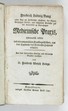
Medicinische Praxis, systematisch erklärt und mit ausgewählten Krankengeschichten, aus dem Tagebuche des Friedrichs-Hospitals erläutert. Aus dem Lateinischen übersetzt und mit einem Register versehen von D. Friedrich Adolph Heinze. Kopenhagen, Christian Gottlob Proft, 1791. Titel, 762, (32) SS. Pappband der Zeit mit goldgepr. Rückenschildchen. Dreiseitiger gesprenkelter Rotschnitt. 8vo. Erste deutsche Ausgabe. - Fredrik Ludvig Bang (1747-1820) war 1775-80 Obermedicus am königl. Friedrichshospital in Kopenhagen. Das vorliegende Werk trug dazu bei, ?auch im Auslande [Bangs] Ruf als eines die pathologische Anatomie berücksichtigenden Klinikers? zu begründen (Hirsch/H.). - Einband stärker berieben. - Blake 30. Hirsch/H. I, 316. Vgl. Wellcome II, 94. Vgl. Waller 650.
Bestellnummer: 5497 - Aus Liste: Naturwissenschaften, Medizin, Technik Anbieter:
Antiquariat Inlibris, Gilhofer Nfg. GmbH, AT - 1010 Wien - AGB
Behrendt, Ernst:
Petroleum. Science Program. New York, Nelson Doubleday, 1966. 8vo. 63 pp., final blank page. With 4 pp. of the "Science Bulletin", not included in pagination. With numerous black-and-white photographic illustrations, 12 mounted photographic illustrations in colour, a plan of oil and gas fields in the U.S., and several charts and drawings. Orignal printed wrappers. Stapled. Accurate overview of gasoline production and oil exploration in the United States. Features historical images of California's first commercial oil well at Pico Canyon as well as of the Drake well in Titusville, Pennsylvania, which struck oil in 1859. In addition, the booklet discusses the general merits of petroleum, its transportation, the maintenance of pipelines and the operation of drilling rigs. - Prepared in cooperation with Science Service, Washington, D.C. - Spine somewhat rubbed. With publisher's original sticker to front cover. - OCLC 663432314.
Bestellnummer: 59988 - Aus Liste: Naturwissenschaften, Medizin, Technik Anbieter:
Antiquariat Inlibris, Gilhofer Nfg. GmbH, AT - 1010 Wien - AGB
Berchelmann, Johann Philipp:
Abhandlung vom Krebs worinnen die Ursachen desselben untersucht und zwey bisher geheim gehaltene Mittel zu dessen Heilung bekandt gemacht werden. Frankfurt am Main, Johann Gottlieb Garbe, 1756. 62, (2) SS. Halblederband der Zeit auf 5 Bünden mit goldgepr. rotem Rückenschildchen. Dreiseitiger Rotschnitt. 8vo. Erste Ausgabe; von großer Seltenheit: Blake und Wellcome kennen nur die Neuausgabe von 1764 unter dem veränderten Titel "Sammlung merckwürdiger Abhandlungen vom Krebs worinnen die Ursachen desselben untersucht und zwey bisher geheim gehaltene Mittel zu dessen Heilung bekandt gemacht werden", die daher oft fälschlich als Erstausgabe bezeichnet wird. Hauptwerk des Darmstädter Pfarrerssohns J. P. Berchelmann (1718-83), der in Gießen Medizin studierte, wo er 1764 Amtsarzt und Hessen-Darmstädtischer Leibarzt wurde. Kein Exemplar auf deutschen Auktionen der letzten Jahrzehnte. - Am hinteren Vorsatzblatt zeitgenöss. hs. Inhaltsverzeichnis. Hinterer Innendeckel und hintere Vorsätze mit unbedeutender Wurmspur, sonst sehr ansprechendes Exemplar. - Engelmann 52. Hirsch I, 403. Nicht bei Blake, Wellcome, Waller etc.
Bestellnummer: 22757 - Aus Liste: Naturwissenschaften, Medizin, Technik Anbieter:
Antiquariat Inlibris, Gilhofer Nfg. GmbH, AT - 1010 Wien - AGB

 Englisch
 Französisch
 Warenkorb





 In den Warenkorb
 Artikel merken
 Weiterempfehlen